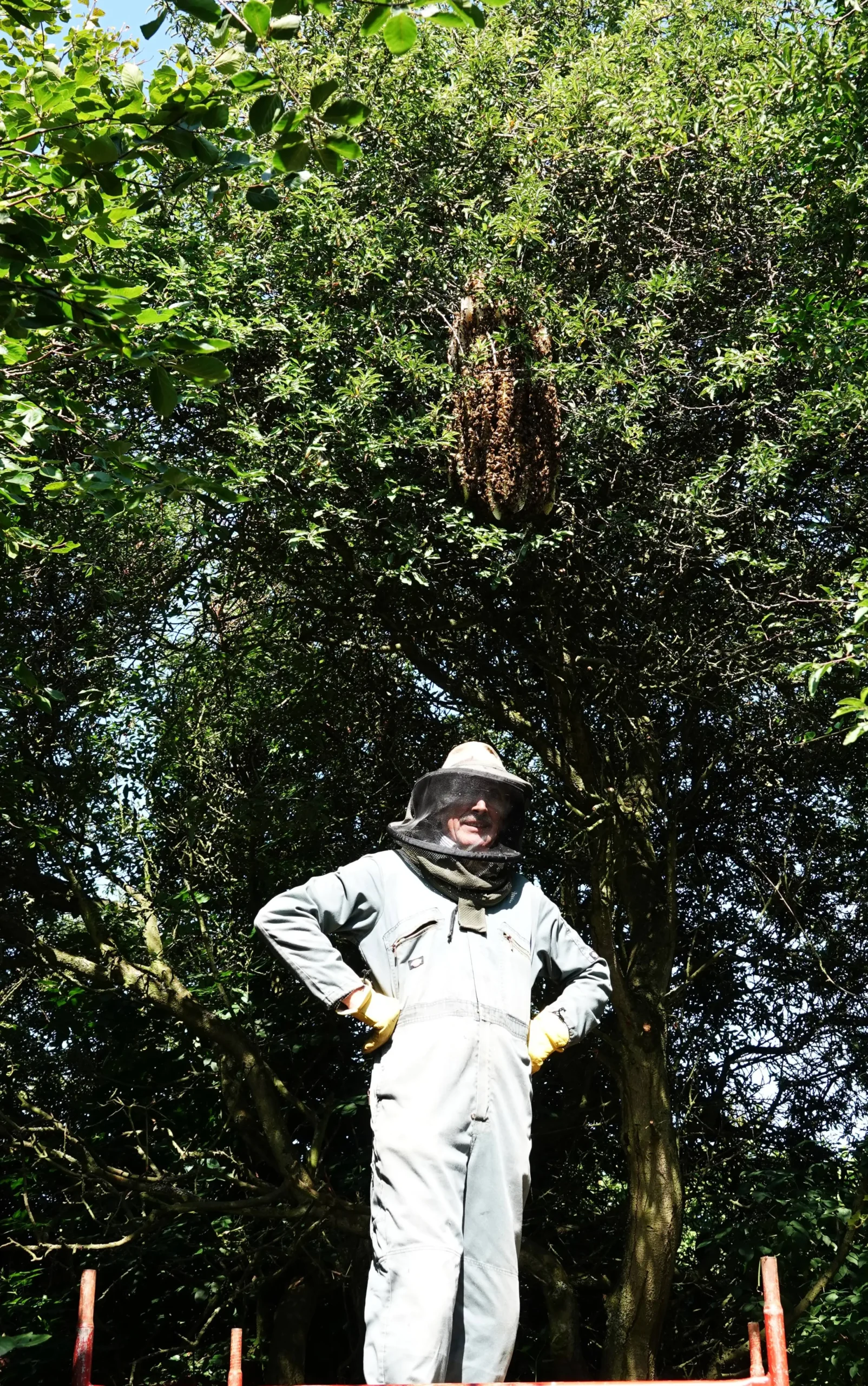
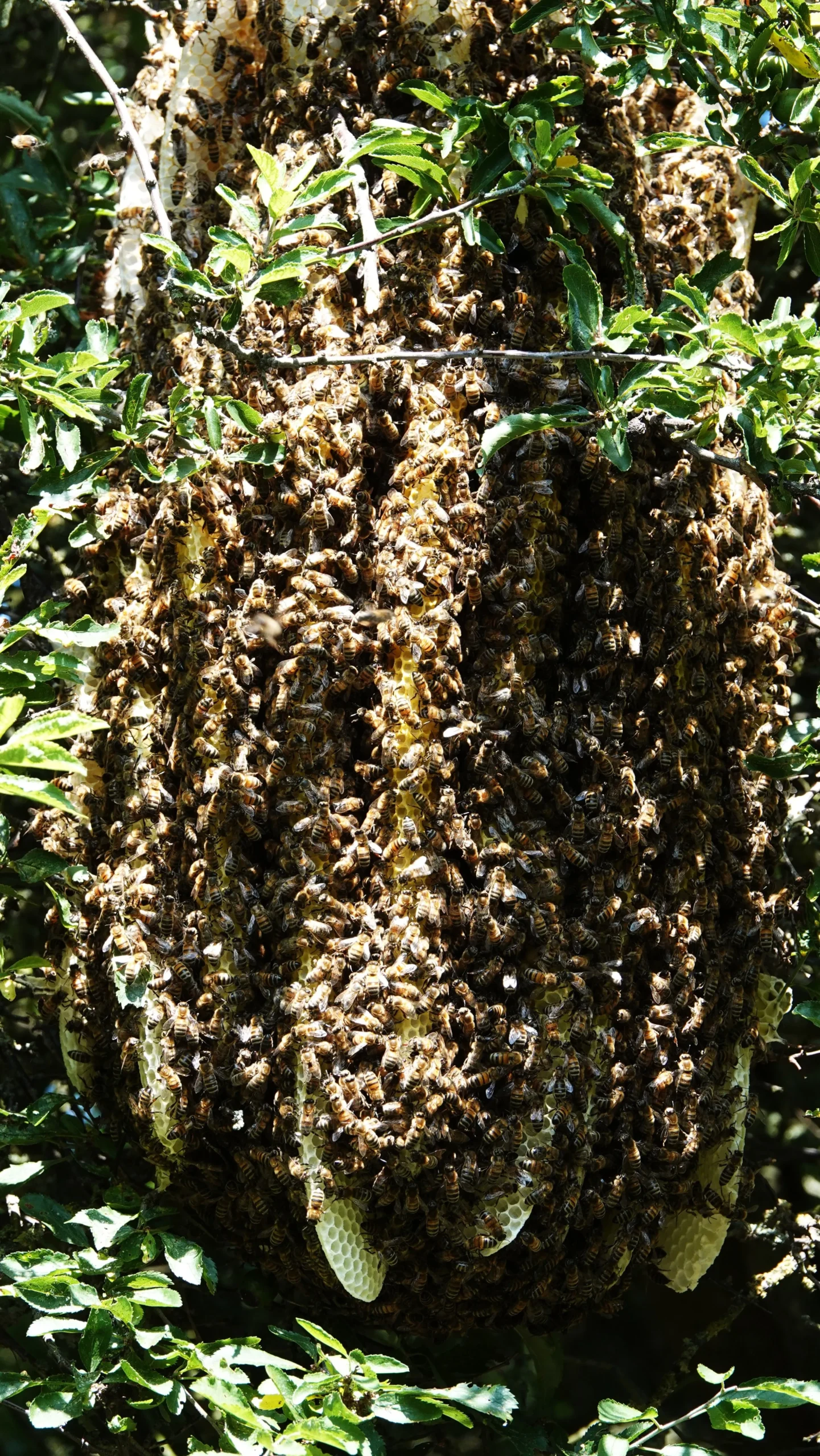
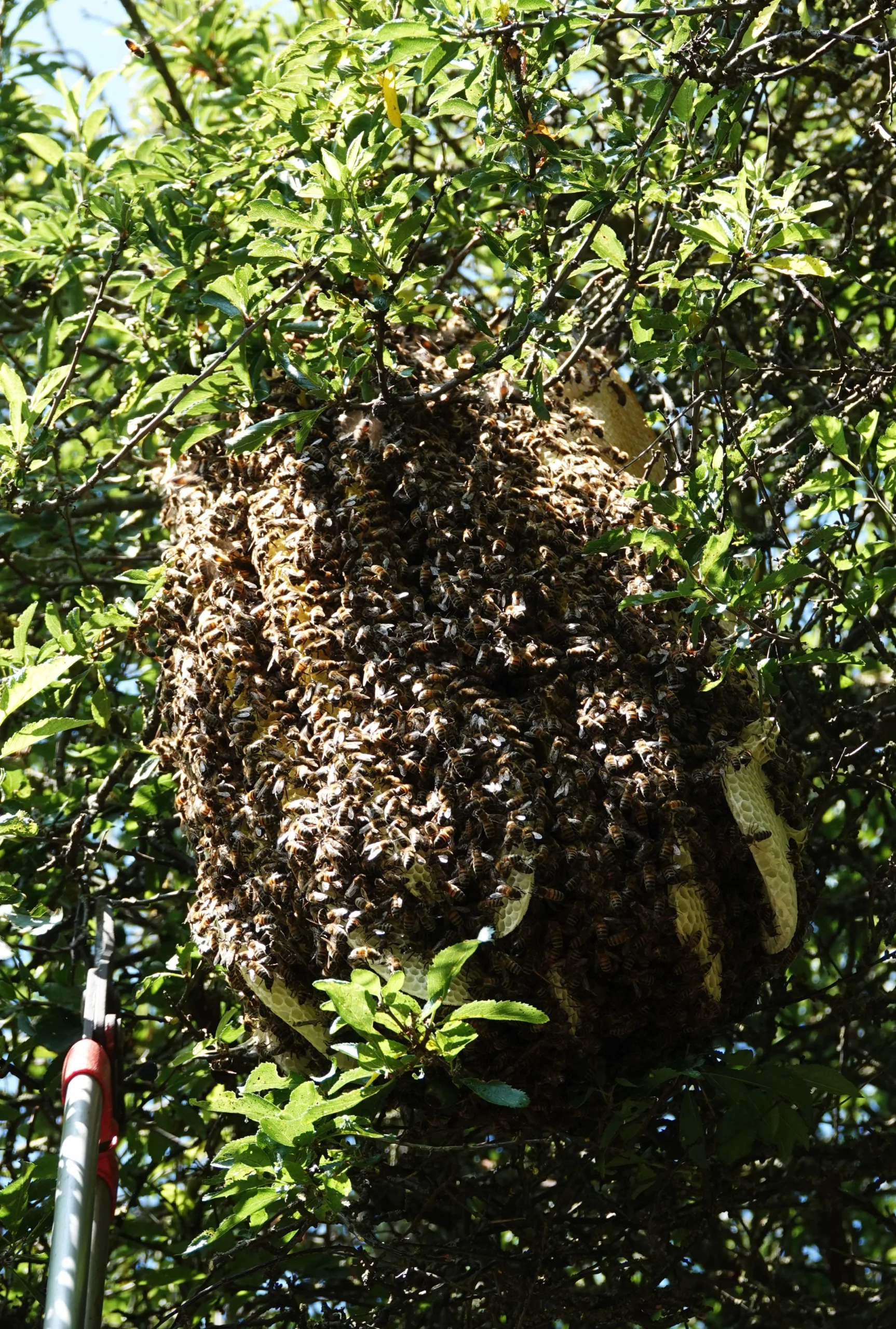
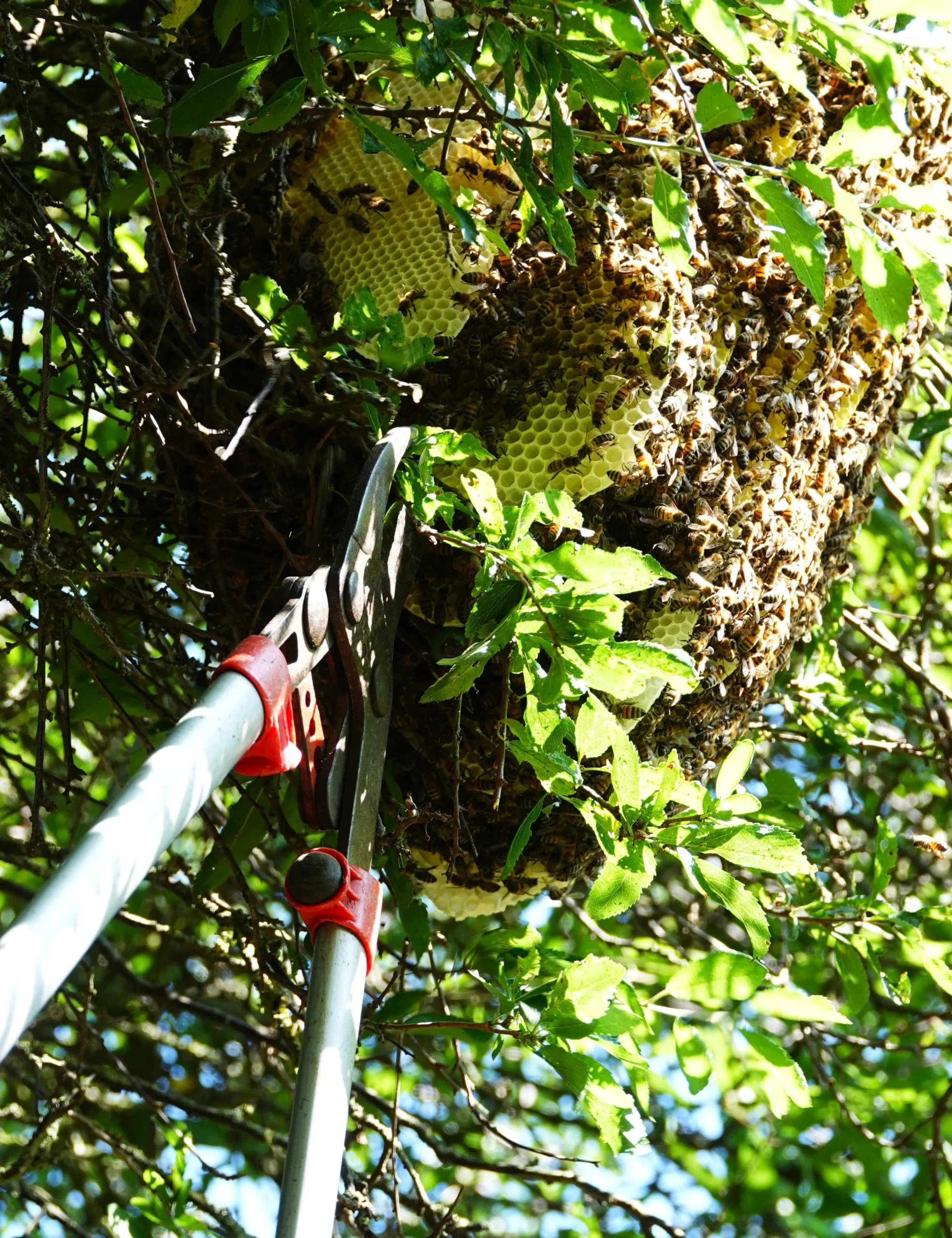
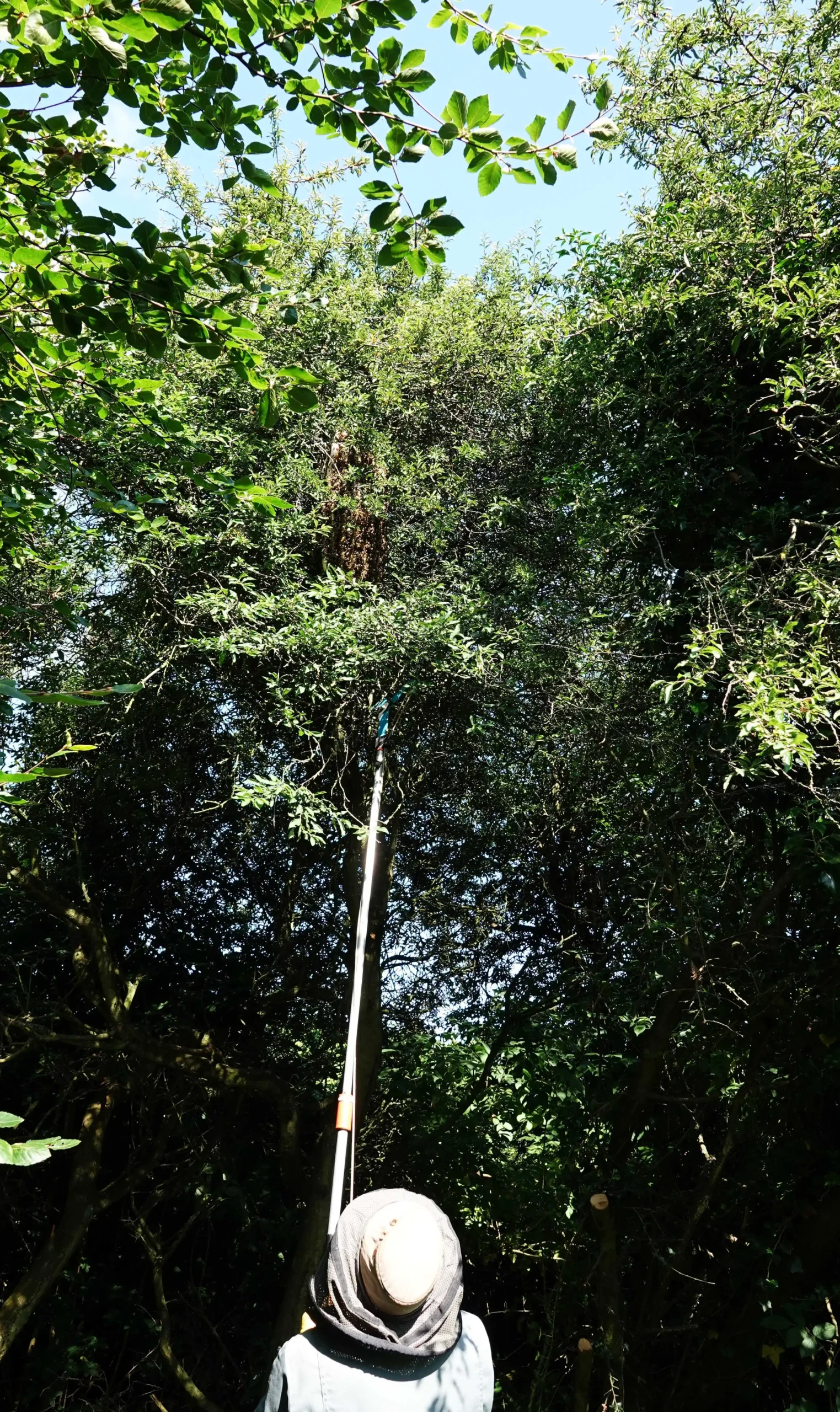
On Wednesday 29th July 2026, one of our members at Scarborough and District Beekeeping Association had quite a find. Alan Yarker discovered a wild colony of honeybees near the association’s apiary at Scalby Mills, and they hadn’t chosen anywhere sensible to live. The bees had set up home out in the open, in a hawthorn tree.
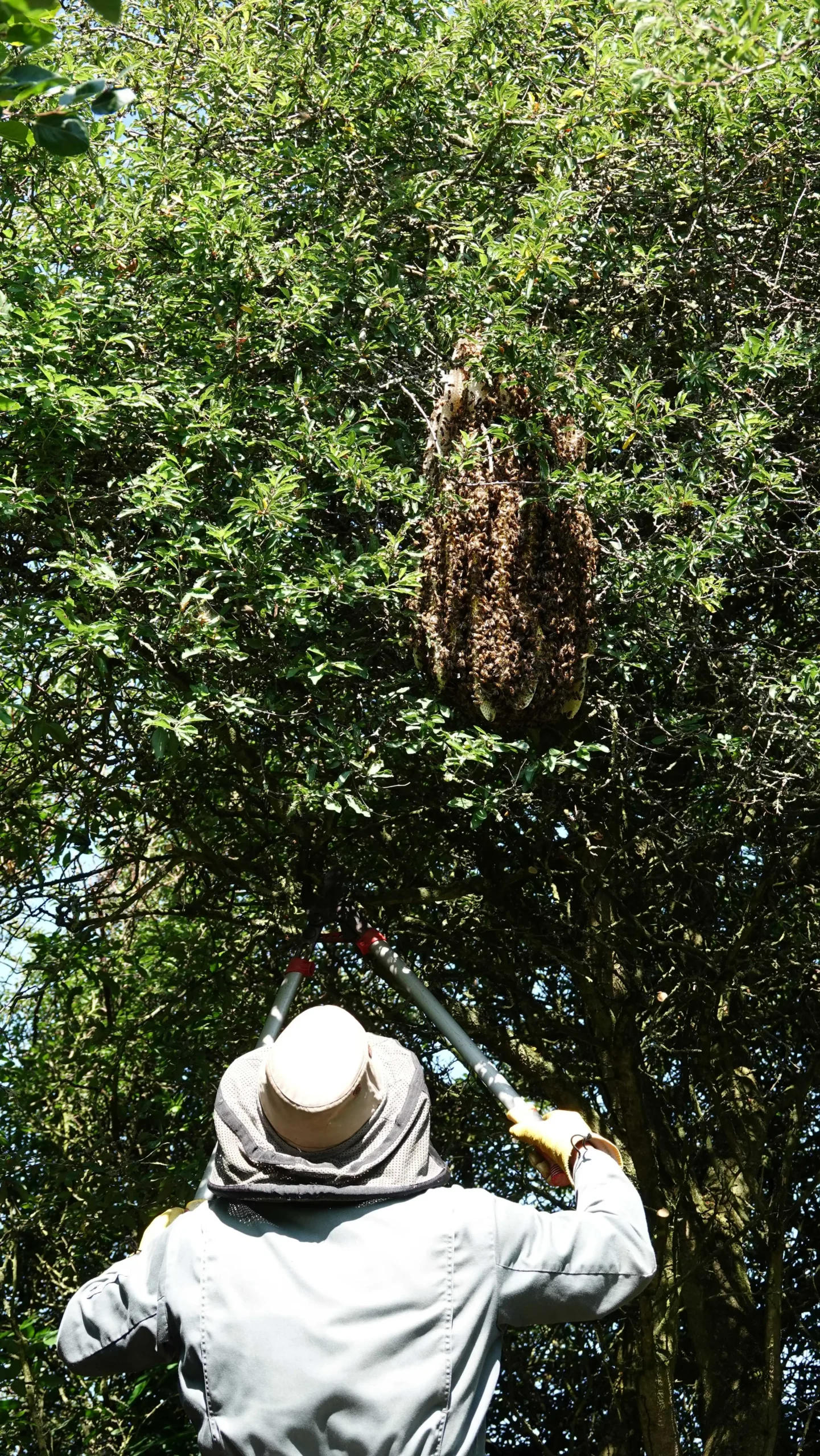
Alan and fellow member Phil Tindall went to take a proper look and clear the branches around it. It’s a striking thing to come across, a colony living completely exposed like that. Given the hot weather we’ve been having, you’d almost think the bees believed they’d ended up somewhere nearer the equator than North Yorkshire.
The plan was to get the colony safely into a box over the following couple of weeks, working from a scaffold platform, then let them settle before moving them to another apiary a few evenings later.
Getting Them Down
What followed was, in Alan’s words, a mammoth effort. Phil built a tower next to the hive and lowered the colony down into a double brood box. It wasn’t straightforward. The comb had been built around every branch in the tree, and a lot of it was heavy with honey. Inevitably, some of it broke away and fell into the box as the colony came down.
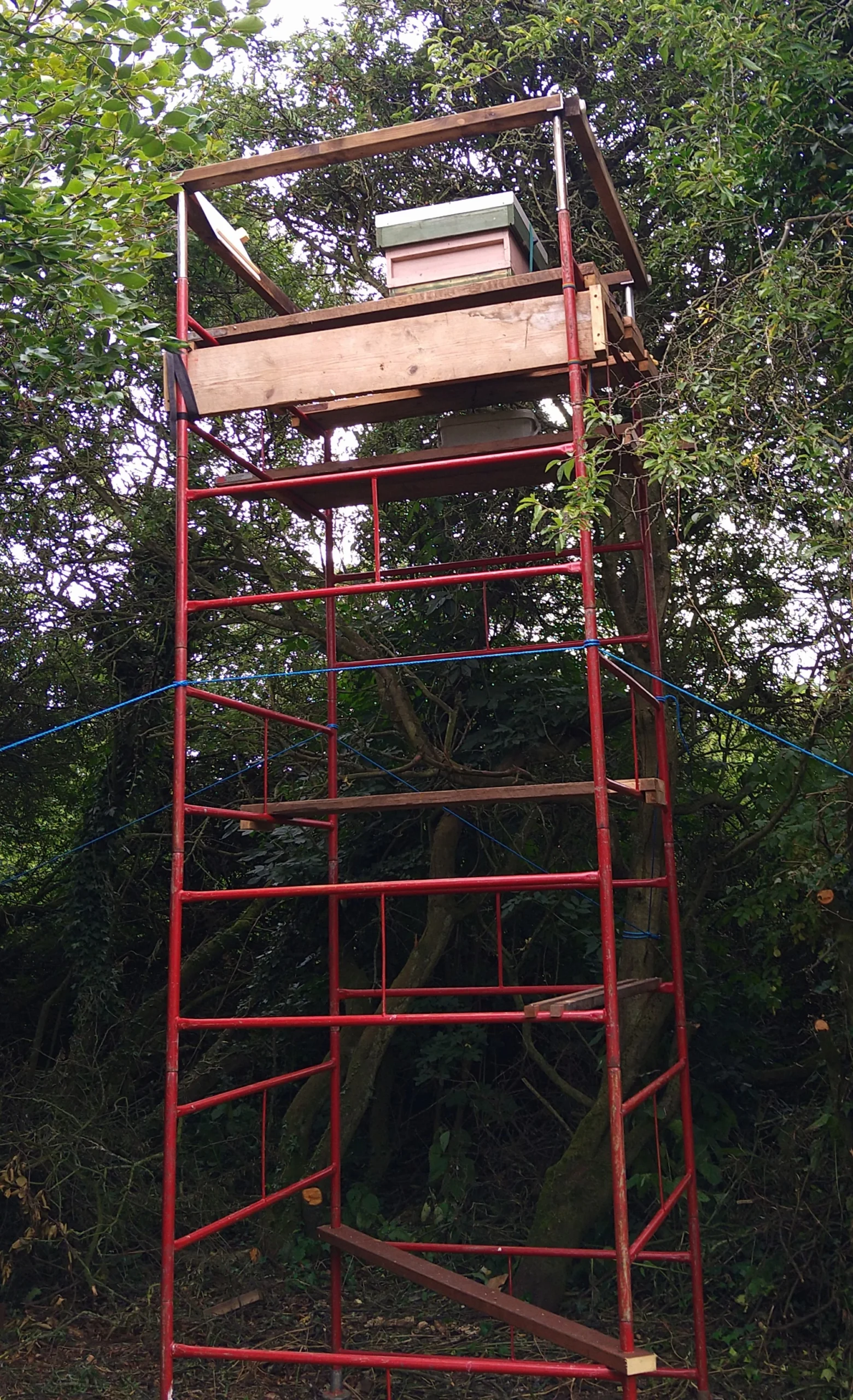
Heck of a job. Alan reckons Phil won’t be in a hurry to do it again.
Settling In
After two days, the bees were coming and going from the box steadily, though there was no sign of the queen. The plan was to leave them on the scaffold for a week or so to settle before bringing them down properly.
That patience paid off. On inspection, ahead of the final move, eggs were visible and an unmarked queen was found, a good sign that the colony had accepted its new home and was already building for the future.
The boxes were then successfully relocated to Phil’s apiary just outside Scarborough, where the colony can continue undisturbed.
Our thanks to Alan Yarker and Phil Tindall of Scarborough and District Beekeeping Association for sharing this one. It’s a good reminder of just how resourceful bees can be, and how much careful, patient work goes into a rescue like this once they’re found.