National Honey Day – 21 October
 Every 21 October, beekeepers across the UK mark National Honey Day, a day to savour honey’s true flavour – and to protect what makes it genuine. At Yorkshire Beekeepers, we invite everyone to join us in celebrating the craft, care, and complexity that go into each jar of real, local honey.
What is National Honey Day?
Organised by the British Beekeepers’ Association (BBKA), National Honey Day is a reminder of why honey matters – not just as a sweet treat, but as an expression of place, nature, and sustainable practice. It encourages us to buy local, enjoy diversity of flavour, support our bees, and know more about what we’re eating.
This year’s theme is “Bee Smart, Choose Local”: recognising that honey from your neighbourhood has meaning – from the blossoms the bees forage on, to the journey from comb to jar.
Why Local Honey makes a difference
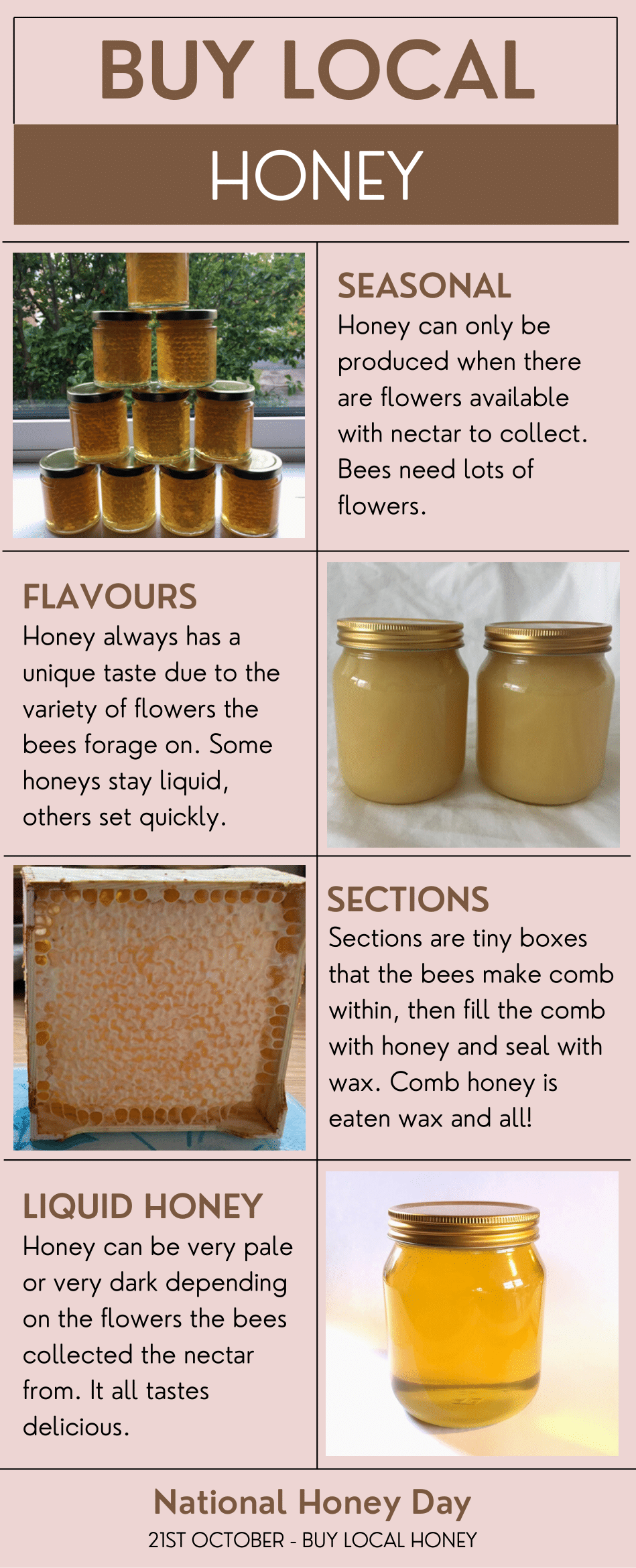
Authentic flavour & variety: Local honey captures the taste of the local flowers, seasons, and landscape. No two honeys are exactly alike.
Environmental & community benefit: Supporting local beekeepers helps conserve pollinators, keeps money in the region, and reduces carbon footprint.
Transparency & trust: With local honey, the journey from hive to jar is shorter, more traceable. Some beekeepers offer tractability on their honey.
The Problem of Adulteration
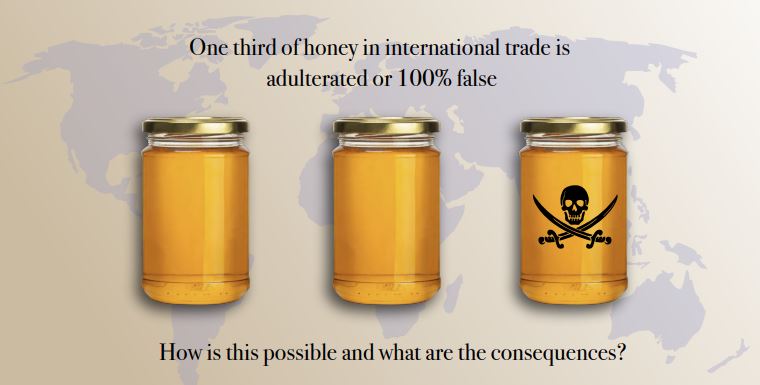
While honey has been a cherished food for millennia, increasingly it is subject to adulteration – that is, dilution or alteration with cheaper sweeteners (e.g. syrups), removal of pollen, or mislabelling. These practices undermine both consumer trust and the livelihoods of honest beekeepers.
What recent evidence shows:
A UK‐based survey by the Honey Authenticity Network found that about 90% of honey samples from large retailers were suspect in terms of authenticity, while all samples from local producers in the same survey were genuine.
Imported honey is sometimes adulterated or mislabelled, making it difficult for consumers to know what they are buying.
Adulteration has consequences: both economic (unfair competition, suppression of price for genuine honey) and potentially health‐related (e.g. higher sugars, unknown additives).
HoneyAP.org
To help protect consumers and beekeepers alike, there are tools and resources available – and one such is HoneyAP.org.
Honey Authenticity Network is a global platform (HAN-UK) that tracks and shares information on honey authenticity, adulteration detection methods, and provides education and empirical data to help users understand what might be in their jars.
It can be a valuable resource whether you are a consumer wanting to verify a honey, a retailer or beekeeper needing up-to-date info, or simply someone keen to be more honey-wise.
What You Can Do
Here are some ways to participate in National Honey Day, protect authenticity, and support quality honey:
Buy local — find honey from beekeepers or farm shops near you. Ask about provenance: where the honey was harvested, from which bees, and what floral sources.
Check labels — is the origin clearly stated? Is it a blend of “EU and Non-EU honeys”? Does it list added sugars or syrups?
Use resources like HoneyAP.org to compare labelling claims, authenticity reports, and detection methods.
Spread the word — share this information with your family, friends, or via social media. Use hashtags such as #NationalHoneyDay, #LocalHoney, #HoneyAuthenticity, #BeeSmartChooseLocal.
Support policy & regulation — encourage regulators, retailers, and food standards authorities to improve labelling, testing, and traceability in the honey supply chain.
A Message from Yorkshire Beekeepers
As Yorkshire beekeepers, we are proud of the honeys produced here – each jar bearing the signature of our landscape and bees. We stand for honesty, flavour, and bee health. On 21 October, we invite you to taste, learn, and choose wisely. Whether you drizzle honey over porridge, use it in baking, gift it to a friend, or simply spread it on toast, make sure it’s real.
Let’s make this National Honey Day one that honours the bees, supports our local producers, and rejects anything less than genuine sweetness.
Local District Associations might be able to point you in the direction of a local beekeeper selling honey. Coming soon…BBKA Local Honey Map!