
Spring Beekeeping Management: Thinking Ahead for a Successful Season
On 17 February 2026, Yorkshire Beekeepers Association members joined an online webinar with Lynfa Davies, Master Beekeeper and National Diploma in Beekeeping holder, to explore one of the most important periods in the beekeeping year: spring management.
Spring is not simply a season of renewal. It is a decisive turning point that determines colony strength, honey yields, swarm control success, and colony survival into the following winter. As Lynfa emphasised throughout the webinar, successful beekeeping depends on thinking ahead. Every decision made now influences colony health and productivity for months to come.
YBKA members who missed the live event have been emailed a Zoom link to view the recording. This is available for a limited time only.
Understanding the Spring Colony Build-Up
After winter, colonies are at their weakest. Adult bee numbers are low, but brood rearing begins to increase steadily as temperatures rise and forage becomes available.
The queen often resumes laying earlier than many beekeepers expect. Even when temperatures remain cold, small amounts of brood are being raised. This creates a delicate balance. The colony must maintain brood warmth while conserving energy and food stores.
Spring weather in the UK is notoriously unpredictable. Sudden cold snaps can force bees back into tight clusters, increasing the risk of brood chilling. Beekeepers may notice discarded larvae or eggs at the hive entrance. While concerning at first glance, this is often a natural response to fluctuating temperatures and not necessarily a sign of disease.
Understanding this fragile stage helps guide careful, supportive management rather than premature intervention.
The Critical Role of Winter Bees
Winter bees differ significantly from their summer counterparts. They are physiologically adapted to survive for several months and support early brood rearing.
These bees store protein internally, allowing them to produce brood food even when pollen is scarce. Their survival depends heavily on late summer and autumn nutrition. Colonies that entered winter well fed and with effective Varroa control have a far greater chance of thriving in spring.
This highlights a key principle of beekeeping: successful spring colonies are prepared months earlier.
Spring Forage and Its Impact on Colony Growth
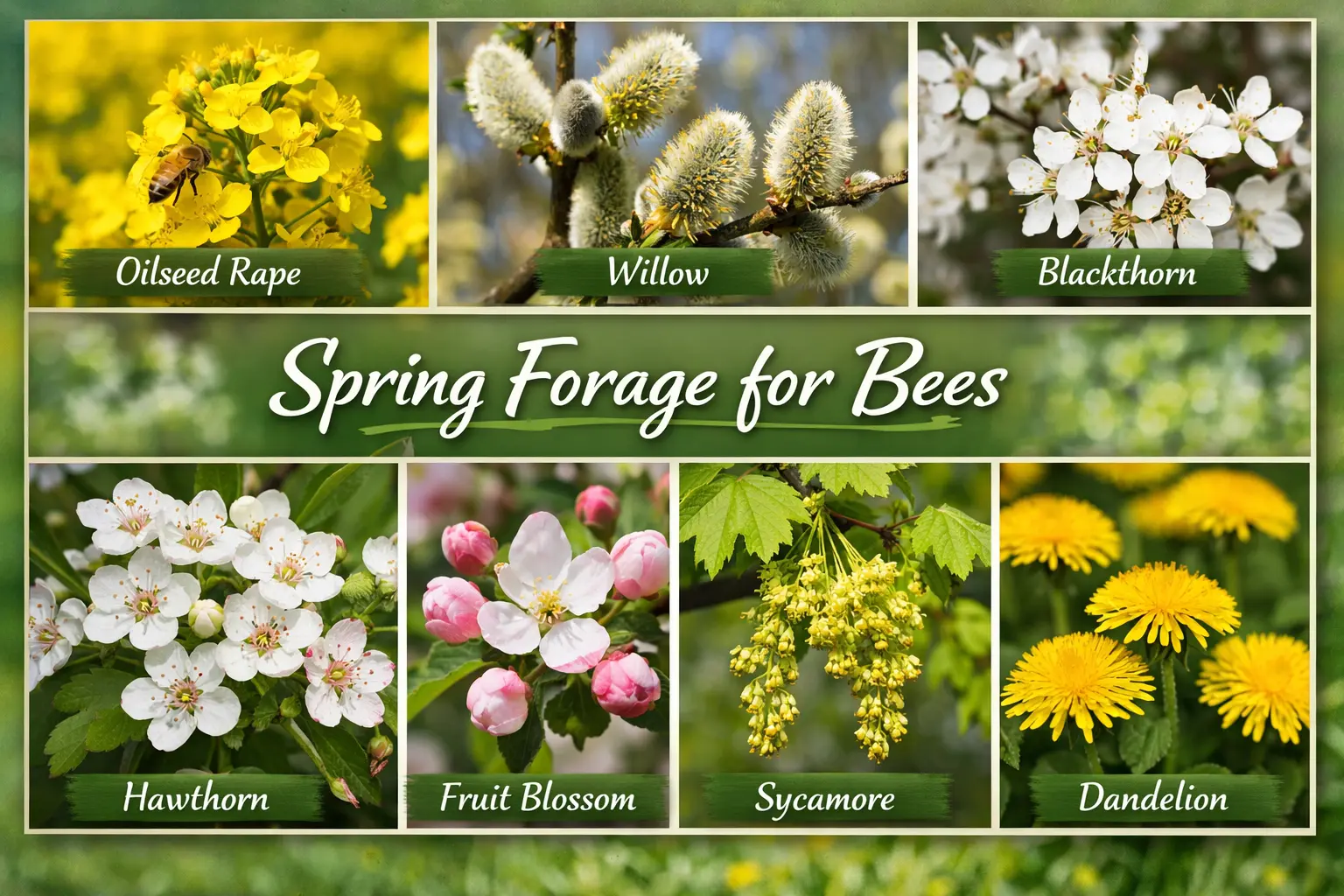
Spring forage availability determines how quickly colonies expand.
In Yorkshire and much of the UK, important spring forage sources include:
-
Oilseed rape
-
Willow
-
Blackthorn
-
Hawthorn
-
Fruit blossom
-
Sycamore
-
Dandelion
Oilseed rape presents both opportunity and challenge. It provides abundant nectar and pollen but produces honey that crystallises rapidly. Colonies near oilseed rape may benefit from early stimulation feeding to maximise productivity.
Understanding local forage availability allows beekeepers to make informed decisions about feeding, colony placement, and expansion.
Feeding Bees in Early Spring
Feeding decisions should be based on colony condition and forage availability.
Fondant is typically preferred during colder weather because bees can access it easily without breaking cluster formation. Syrup feeding becomes more effective as temperatures rise and can stimulate colony growth by mimicking nectar flow.
Pollen substitute feeding may be useful when natural pollen is scarce, particularly for colonies being prepared for early honey flows such as oilseed rape.
However, where natural pollen is plentiful, supplementary feeding is often unnecessary.
Monitoring and Managing Varroa in Spring
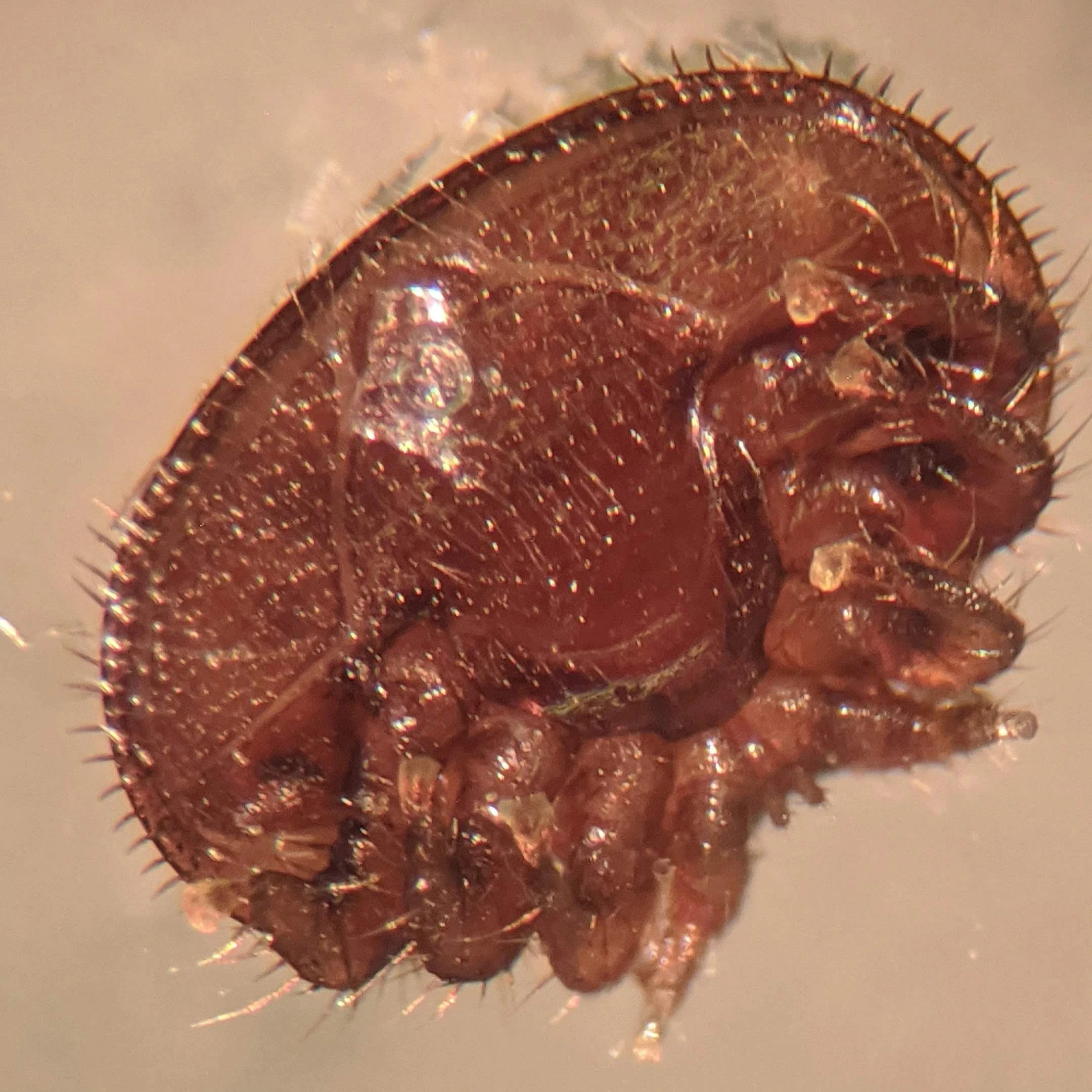
Varroa remains one of the most significant threats to colony health.
Spring monitoring is essential. One of the simplest methods involves using an inspection board beneath an open mesh floor to measure daily mite drop. Low mite counts may require no immediate action, while higher levels demand intervention.
Integrated pest management approaches are recommended, combining monitoring, biotechnical methods, and treatments where necessary.
Effective Varroa control early in the season supports stronger colonies and improves honey production potential. NBU guidance on Varroa Management
The Shook Swarm Method: A Powerful Spring Management Tool

One of the most effective spring management techniques discussed was the shook swarm.
This involves transferring bees onto clean foundation, leaving behind old comb and brood. The process achieves several important goals:
-
Dramatically reduces Varroa levels
-
Replaces old comb with fresh, clean comb
-
Improves colony health
-
Delays swarming impulse
-
Revitalises colony productivity
The shook swarm is best performed on strong colonies and during favourable weather conditions. Proper feeding afterwards is essential to support comb building and recovery. Bees can abscond when performing a shook swarm, so a queen excluder under the new brood box is a useful insurance policy.
While not suitable for every colony or beekeeper, it is a powerful method when applied correctly.
Nosema and Spring Colony Health
Nosema is another disease that can affect colonies during spring.
Signs may include dysentery and faecal staining at the hive entrance. While there are no licensed treatments in the UK, management strategies include comb replacement and improving colony conditions.
The Bailey comb change is often preferred for weaker colonies, as it allows gradual transition onto clean comb with less stress.
Healthy colonies with good nutrition and clean comb are more resilient and better able to recover naturally.
When to Perform the First Spring Inspection
The timing of the first inspection varies depending on weather and colony activity.
Rather than relying solely on temperature, beekeepers should observe colony behaviour. Active flight, pollen collection, and general colony activity indicate that inspection is possible.
The first inspection should be brief and focused on three key questions:
-
Is the colony queenright?
-
Does the colony have sufficient food stores?
-
Is the equipment in good condition?
If these conditions are met, the colony is progressing well.
Asian Hornet Monitoring: A Growing Responsibility
The yellow-legged Asian hornet continues to pose a serious threat to UK honey bees.
Spring monitoring is critical because overwintered queens begin establishing new nests. Early detection significantly improves the chances of controlling spread.
Monitoring methods include bait stations and traps designed to minimise harm to native insects.
Beekeepers play an essential role in protecting their colonies and supporting national monitoring efforts.
Members of the public can also get involved and help us: https://ybka.org.uk/help
Planning Ahead for a Successful Season
Spring is a time of opportunity, but success depends on preparation, observation, and thoughtful intervention.
Healthy spring colonies lead to:
-
Strong summer populations
-
Reduced disease impact
-
Improved honey yields
-
Better overwintering success
As Lynfa Davies emphasised, beekeeping is always forward-looking. Every action taken today influences the outcome of future seasons.
With careful spring management, beekeepers can set their colonies on a path to strength, productivity, and resilience.
Watch the Webinar Recording
YBKA members have been sent a Zoom link by email to view the full webinar recording. This is available for a limited period, so members are encouraged to watch it soon.